Kampala · Buganda Kingdom · Two days
From Ndejje Road to the Buganda Palace
A two-day guided route through the royal precinct of Mengo and Namirembe — the Lukiiko at Bulange, the Royal Mile, the gates of the Lubiri, the Tombs of the Kings at Kasubi and the lake Kabaka Mwanga dug by hand.
- Days
- Friday & Saturday (2 days, 1 overnight in Kampala)
- Start / finish point
- Ndejje Road, Namirembe — Mengo
- Route
- Ndejje Road → Namirembe → Bulange → Royal Mile → Lubiri (Buganda Palace)
- Group
- Private group, 2–6 guests, own vehicle with driver-guide
- On foot
- ≈4.1 km Friday · ≈1.5 km Saturday — gentle, with shade stops
- Fitness
- Easy. One optional 304-step minaret climb
The route
Nine stops, three hills, one royal mile
Everything sits inside Rubaga Division, on the ring of hills that look down on the city centre: Namirembe, Mengo, Kasubi, Lubaga and Ndeeba. Toggle a day to see how it strings together.
Day one
The Royal Mile — from Namirembe down to the palace gates
Start on the hill where the kingdom's church stands, walk the ceremonial avenue the Kabaka's ancestors cut between the parliament and the palace, and end the day inside the Lubiri itself — the Buganda Palace — where the story of 1966 is still on the ground.
-
08:0020 min
Pick-up and briefing
Ndejje Road, NamirembeMeeting point · both mornings start here
Collect the group at the Ndejje Road address. Over water and hats, run through the shape of the two days, hand out the printed itinerary, and set the ground rules for the sacred sites: shoes off at Kasubi's gatehouse, no photography inside the tomb chamber, modest dress at both cathedrals and the mosque. Cash for gate fees is worth sorting out now — several sites take shillings at the entrance and card machines are not a given.
Guide note. Kampala's traffic peaks between 07:00–09:30. Leaving the pick-up by 08:00 keeps the morning sites ahead of the school run and the worst of the congestion.
- → 1.3 km · 5–10 min by vehicle, uphill to the cathedral forecourt
-
08:2550 min
Namirembe Cathedral
Hilltop · free entrySt Paul's Cathedral Namirembe · Namirembe Hill
The oldest Anglican cathedral in Uganda, and the seat from which the Church of Uganda is run. Four earlier churches on this hill were lost — to swamp, to a storm in 1894, and finally to a fire started by lightning on 23 September 1910 that gutted the roof in under half an hour with the young Kabaka Daudi Chwa II sitting in the congregation. The present building went up between 1915 and 1919 in earthen brick and earthen tile, and still carries its own weight without steel.
- Walk the forecourt for the view northwest over Mengo and the palace below.
- Look at the brickwork and the timber roof structure — this is hand-made material, not imported stone.
- Quiet, please: services and burials take place here daily. A donation at the entrance is the custom.
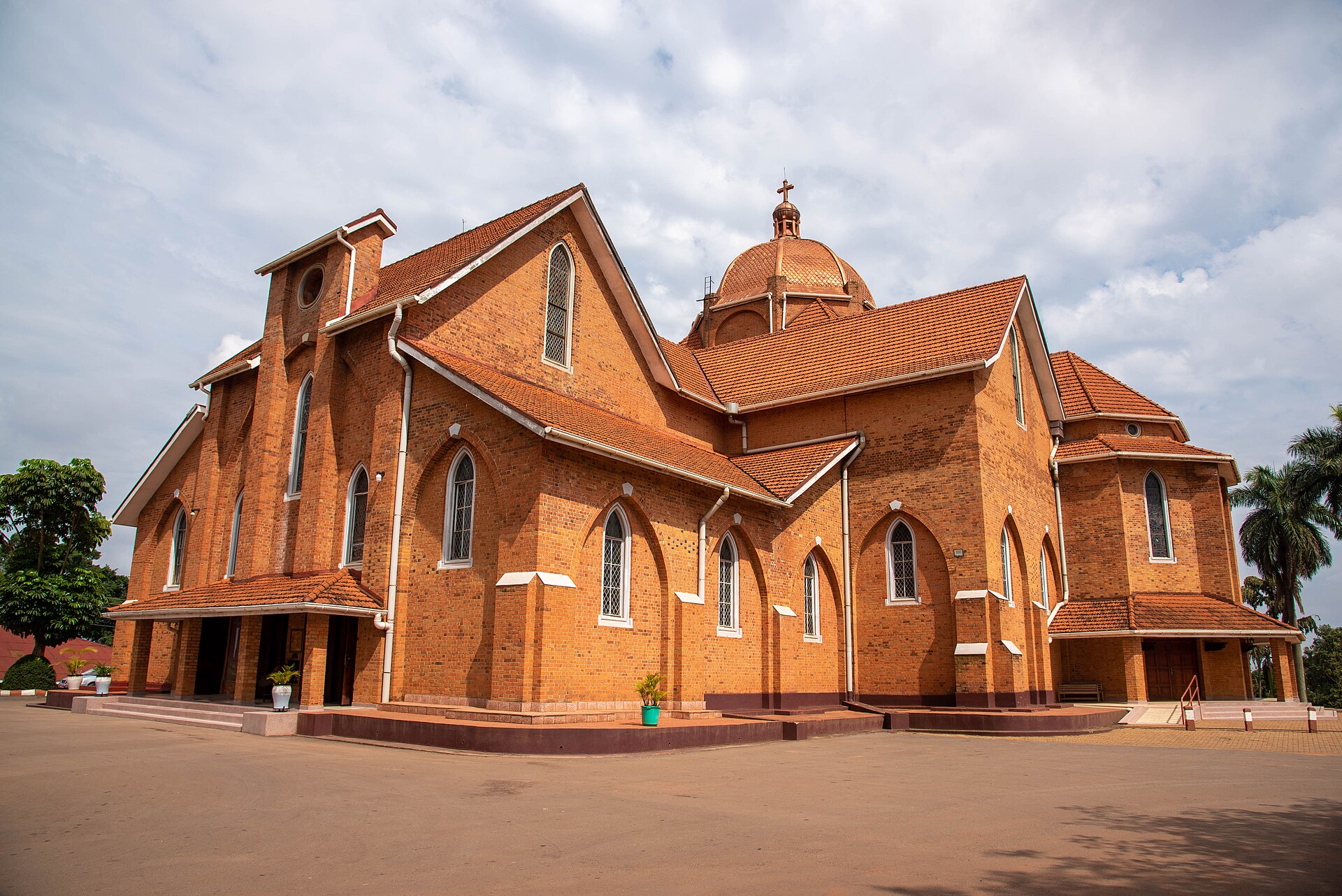
St Paul's Cathedral Namirembe (1915–1919). Photo: Timothy Akolamazima (CC BY-SA 4.0) - → 1.1 km · 15 min on foot, downhill past Mengo Hospital — or 5 min by vehicle
-
09:3575 min
Bulange — the Lukiiko
Guided tour · fee on entryBuganda Parliament & royal offices · foot of Namirembe Hill
Bulange is the kingdom's working seat of government, built by Kabaka Muteesa II between 1953 and 1958 and still housing the Lukiiko — the Buganda parliament — and the Kabaka's offices. The symbols of Buganda's 56 clans are worked into the building, and the portraits and regalia inside carry the kingdom's roll of kings.
- Join the guided tour of the Lukiiko chamber and ask the guide to explain how a clan is represented, and how the Lukiiko sits today.
- This is the office that arranges kingdom visits — good place to reconfirm palace and Kasubi access for tomorrow.
- The terrace gives you the full length of the Royal Mile running straight down to the palace gates.
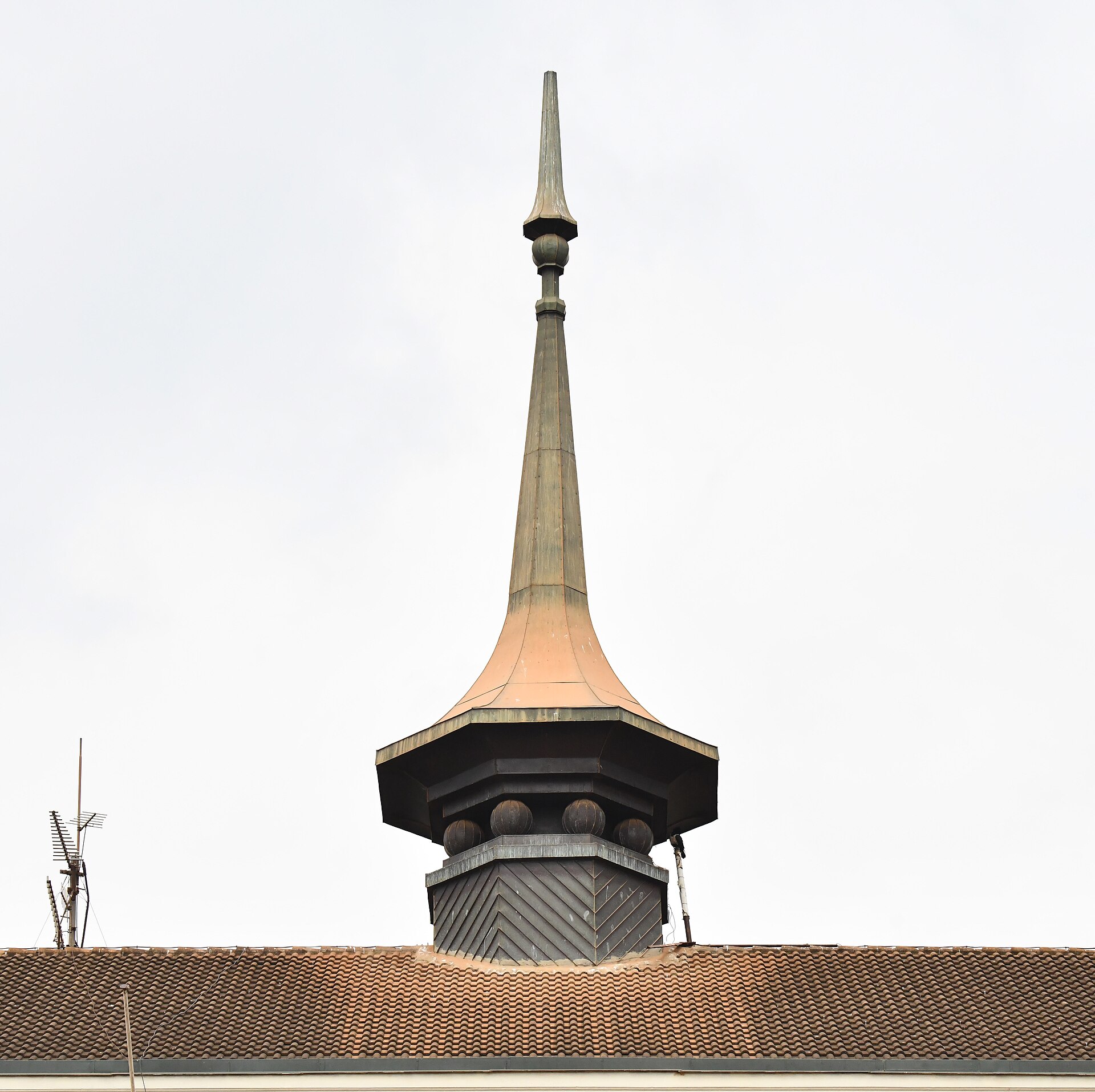
The Bulange's spire over Mengo. Photo: Ssemmanda will (CC0) - → 1.3 km · 20 min walk down Kabaka Anjagala Road (the Royal Mile)
-
10:5020 min
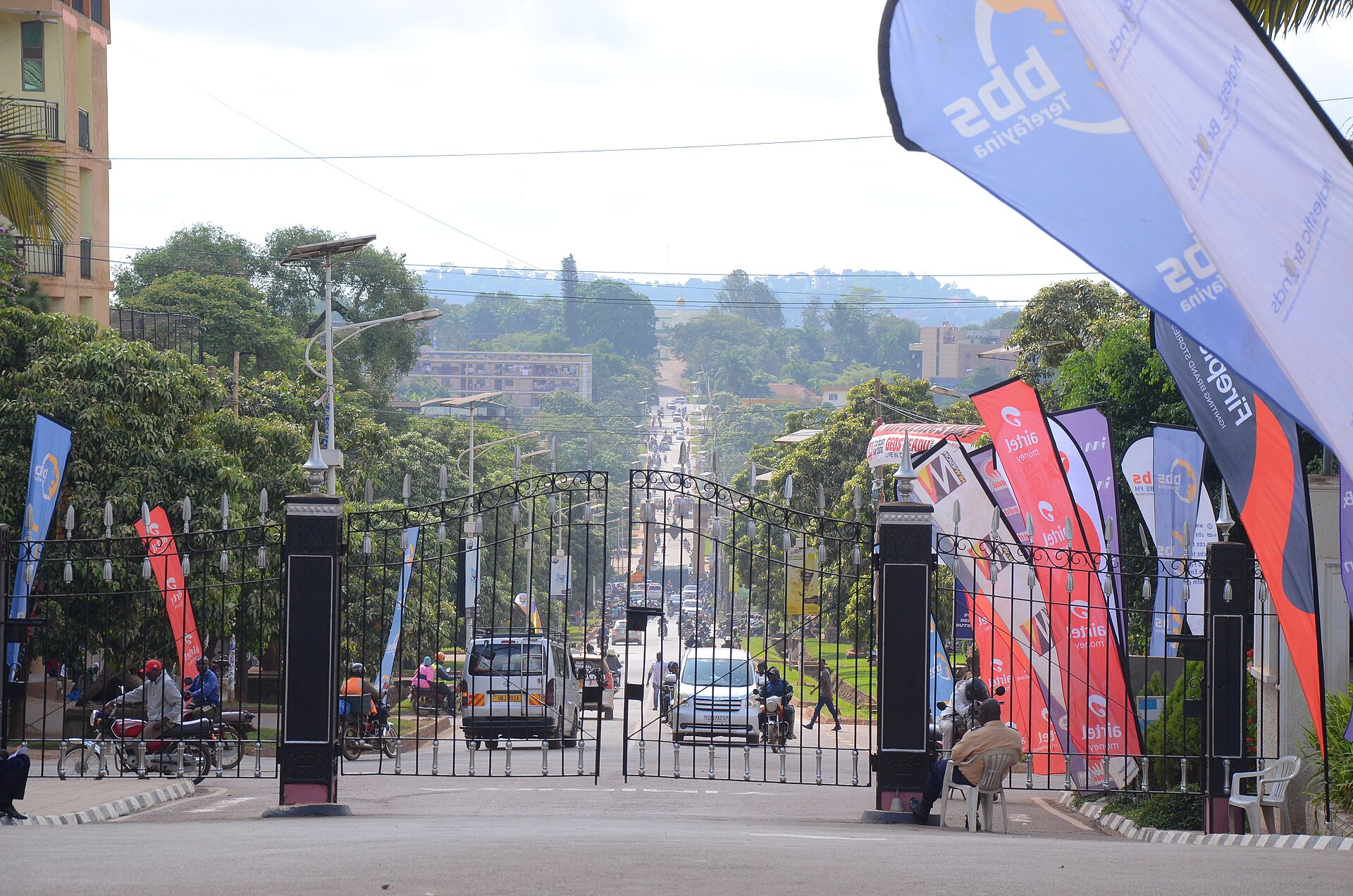
The Royal Mile
On foot · freeKabaka Anjagala Road · Bulange to the Lubiri gates
The one road in Kampala that was laid out for a king: a dead-straight ceremonial avenue from the entrance of Bulange to the palace gate, traditionally lined with candlenut trees, one for each of the kingdom's clans. You walk it the way it is meant to be walked — downhill, toward the palace.
- Watch for the clan totem monuments on the verge — sculpted animals that stand for the clans of Buganda.
- Good spot for the group photograph, with the palace gate ahead and the avenue behind.
-
11:1590 min
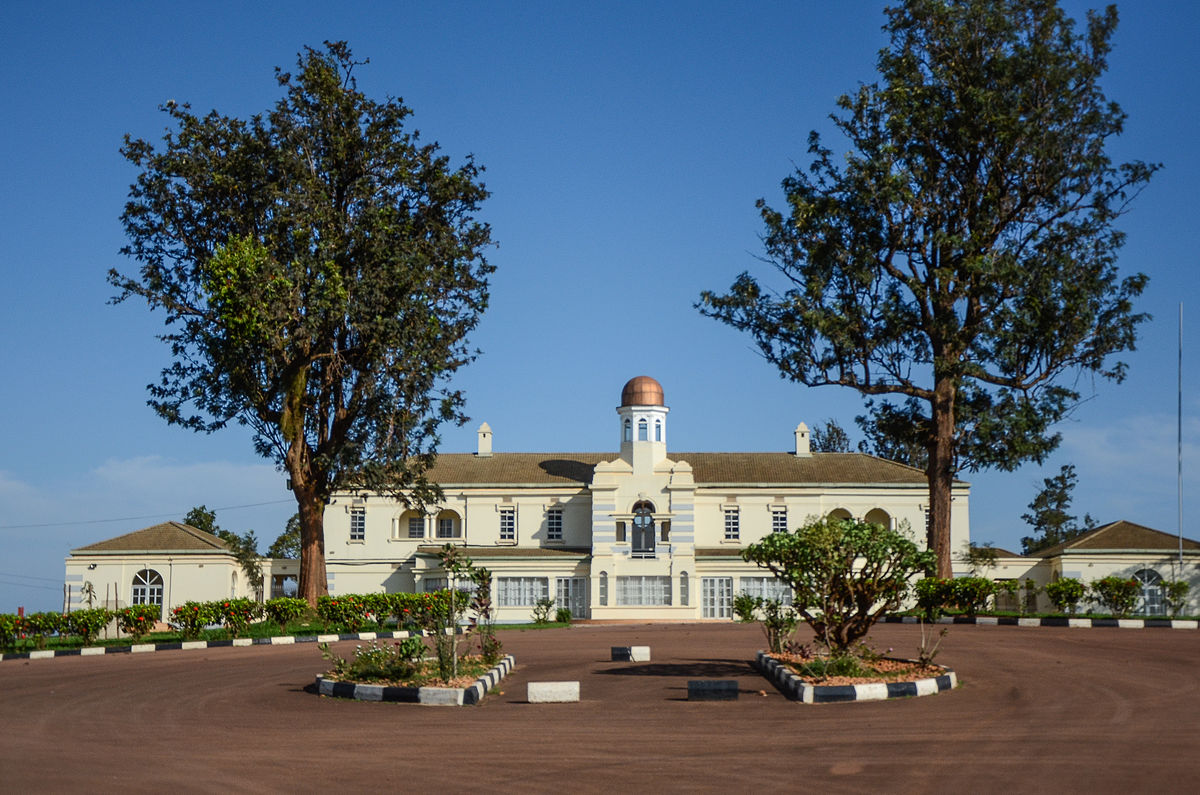
The Lubiri — the Buganda Palace
Guided tour · 08:30–17:00Kabaka's Palace · Mengo Hill · open daily
The destination of the trip. The Lubiri has been the royal compound of the Kabaka of Buganda since Kabaka Mwanga II built it on Mengo Hill in 1885 — four square kilometres of grounds, gates, lawns and memory. A guided tour takes in the compound and its story, from the kingdom's oldest continuous institution to the morning in May 1966 when the Uganda Army overran the hill during the battle between Muteesa II and Milton Obote.
- Twekobe, the Kabaka's residence, holding the namulondo (the royal throne). Exterior only — the residence is not open to visitors.
- The Amin-era dungeon — five cells built into the compound, kept as a sombre historical exhibit.
- The collection room: royal photographs, regalia, remnants of the 1966 attack, and the vintage Rolls-Royce of Kabaka Muteesa II.
- The perpetual fire (ekyoto ggombolola), lit twice daily by the Nakisinge clan and extinguished only when a Kabaka dies.
Guide note. Photography is restricted in places, and never permitted inside the residence. Follow the palace guide's instructions exactly — this is a working royal compound and ceremonies take precedence over visitors. Entrance fee is paid at the gate; reconfirm the current rate the day before.
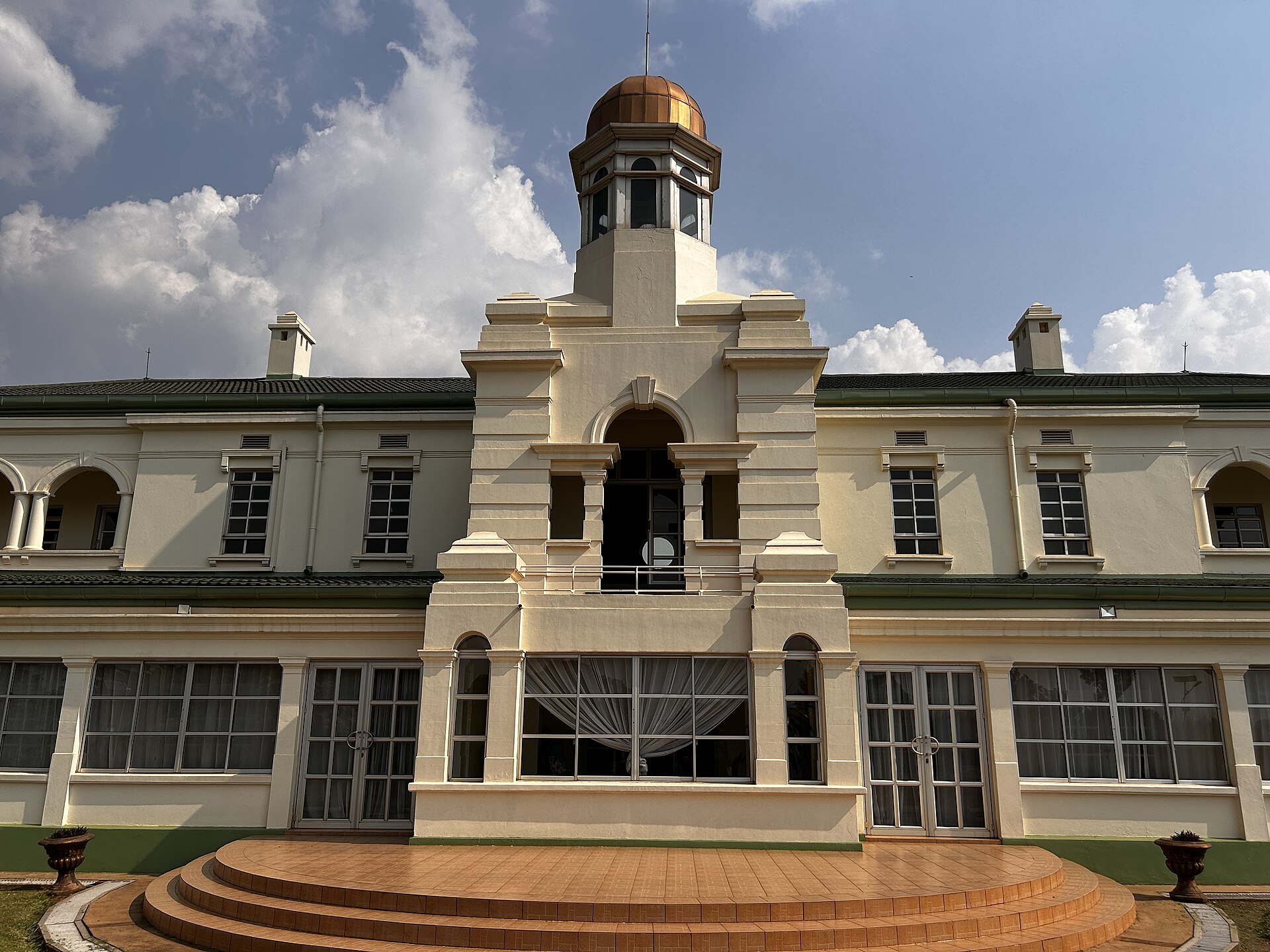
Twekobe, the Kabaka's residence inside the Lubiri. Photo: Scotted400 (CC BY-SA 4.0) - → 1.7 km · 5–10 min by vehicle to lunch in Mengo or Namirembe
-
12:5075 min
Lunch
Mengo / NamirembeLocal Ugandan kitchen · Mengo or Namirembe
Sit down properly — the afternoon is still full. Order Ugandan: matooke with groundnut sauce, luwombo steamed in banana leaf, grilled chicken or tilapia, and a cold drink. If the group would rather press on, a rolex (chapati rolled around an omelette) from a trusted stand takes ten minutes and is worth the stop on its own.
Guide note. Confirm the kitchen in advance if the group has more than four people, and flag any dietary requirements when you book the table. Bottled or filtered water only.
- → 0.6 km · 5 min on foot, or 2 min by vehicle
-
14:1060 min
Mengo Market & the clan monuments
Free · bring small changeMengo Hill, between Bulange and the palace
A working market rather than a tourist one — fruit, matooke, dried fish, second-hand clothing — and the everyday counterpoint to the ceremonial morning. On the road between Bulange and the palace stand the clan totem sculptures of Buganda, carved animals on plinths marking the clans: the Engabi (antelope), Ente (cattle) and Ngo (leopard) among them.
- Buying fruit here is welcome; haggling is friendly and expected, but not aggressive.
- Ask before photographing people, and expect a small tip if they say yes.
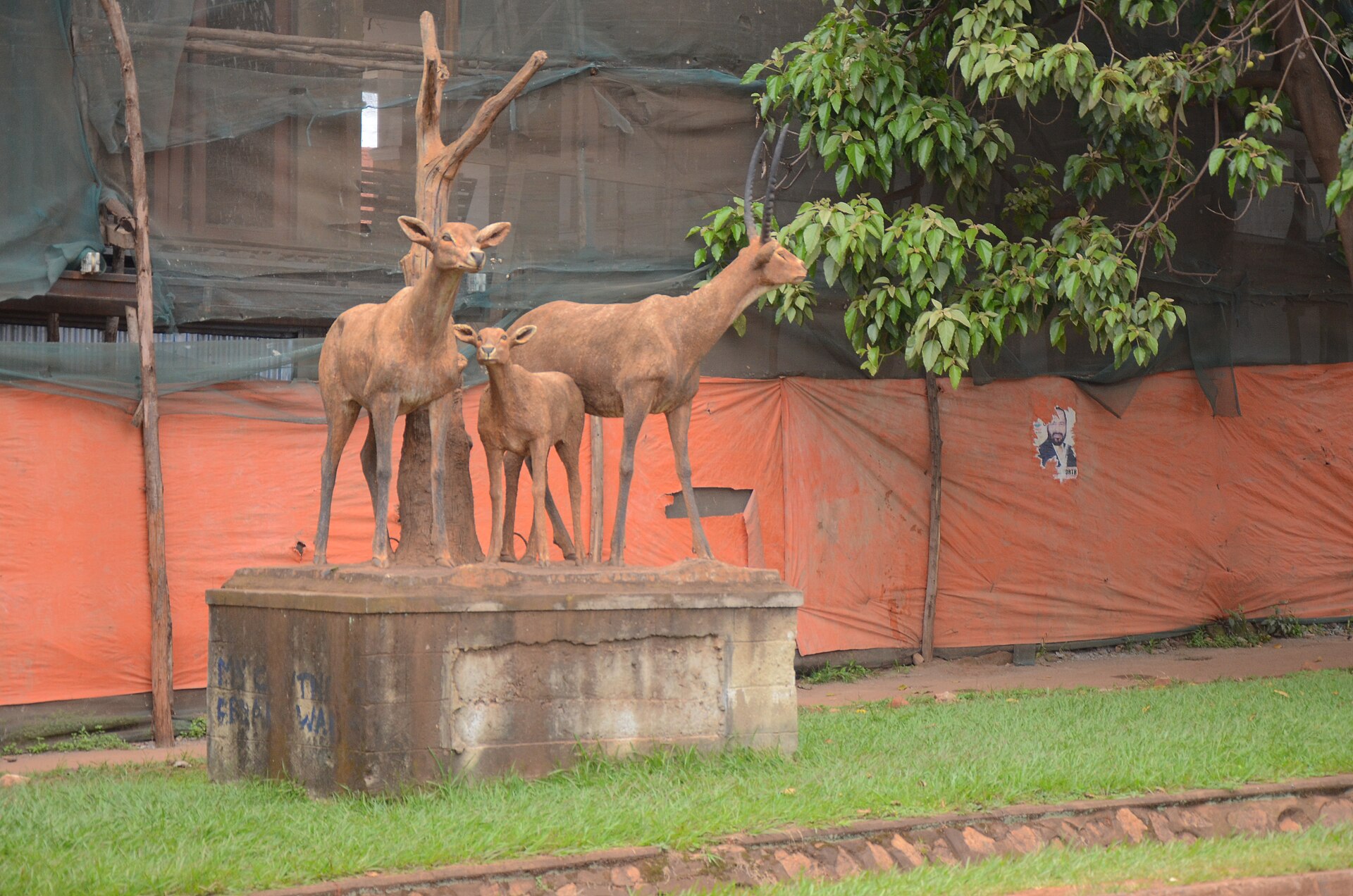
Clan totem sculpture, Mengo. Photo: Samson Ssemakadde (CC0) - → 1.3 km · 5–10 min by vehicle to Old Kampala Hill
-
15:2590 min
Uganda National Mosque (Gaddafi Mosque)
UGX 25,000 · optionalOld Kampala Hill · 09:00–18:00, closed over Friday prayers
Ride the morning's history into the present: the largest mosque in East Africa, a gift from Libya completed in 2007 and the headquarters of the Uganda Muslim Supreme Council. Visits are guided, and the reward at the end is the climb — roughly 300 steps up the spiral staircase inside the 50-metre minaret for the best public panorama in Kampala: all seven of the city's original hills in one turn, and Lake Victoria on the southern horizon on a clear day.
Guide note. On Fridays the mosque closes for Jumu'ah — tourist access runs 09:00–11:30, then reopens at 14:00. Dress: wrists and ankles covered for women, with a headscarf; men in long trousers and sleeves. Coverings are lent at the desk. The minaret climb is not suitable for guests with limited mobility or a fear of heights — the staircase is narrow and steep.
- → 1.3 km · 5–10 min back to Ndejje Road
-
17:1560 min
Reset at Ndejje Road
BreakNdejje Road, Namirembe
Back to the accommodation for a shower, a change of shirt and tea before the evening. Agree a firm departure time for the show and have everyone ready in the vehicle — the run to Ntinda crosses the city, and 18:00 is when it thickens.
- → 11 km · 30–45 min by vehicle to Ntinda (optional evening)
-
19:003 hrs
Optional evening: the Ndere Troupe
Fri 19:00–22:00 · UGX 95,000Ndere Cultural Centre · Kisaasi Road, Ntinda
If the group has the appetite for it, Friday is one of only three nights a week the Ndere Troupe performs — a 700-seat open-air amphitheatre, traditional music and dance drawn from Uganda's many cultural groups, storytelling, and a barbecue buffet that runs alongside the show. Afro-jazz and storytelling lead the Friday programme.
Guide note. Reserve ahead — Friday fills. International guests pay UGX 95,000 (≈ USD 30), Ugandan nationals UGX 55,000, children 3–12 UGX 30,000, dinner included. Doors from 19:00; the return to Ndejje Road lands around 22:45. If the group would rather stay close to bed, substitute a relaxed dinner in Mengo and finish the day at 20:00.
Day two
Sacred hills and the lake the Kabaka dug
North to Kasubi, where four kings lie under the largest thatched roof of its kind; then south to Ndeeba for the lake cut out of the ground by hand in the 1880s, and home across to Lubaga for the Catholic cathedral on the third hilltop of the day.
-
08:0015 min
Pick-up and drive north
Ndejje RoadNdejje Road → Kasubi Hill · 2.6 km
Collect the group and head for Kasubi. Saturday morning is the quietest window at the tombs — midweek and weekend mornings give the most reflective visit, before the day's ceremonies and school groups arrive.
-
08:302 hrs
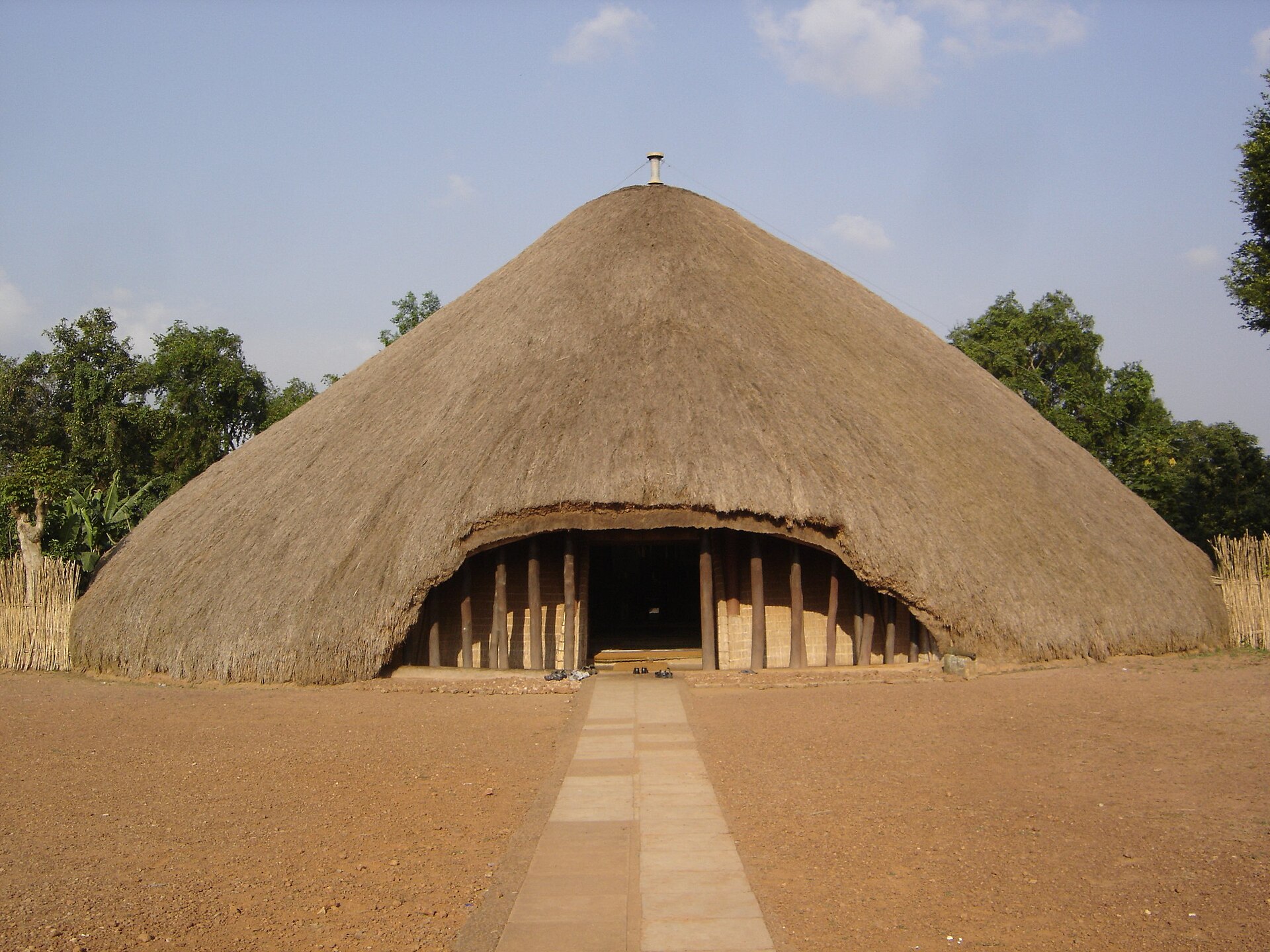
Kasubi Tombs — the Tombs of the Kings
UNESCO · 08:00–18:00Masiro Road, Kasubi Hill · guided tours compulsory
Uganda's only UNESCO World Heritage Site inside the capital, and the spiritual centre of the Buganda Kingdom: the royal burial ground of four Kabakas — Muteesa I, Mwanga II, Daudi Chwa II and Muteesa II — inside the Muzibu-Azaala-Mpanga, a circular structure of wood, reeds, thatch and bark cloth that is among the largest buildings of its kind anywhere in the world. The roof holds 52 concentric rings of woven grass, one for each clan.
- Shoes come off at the Bujjabukula gatehouse. Women should cover their legs — wraps are lent at the entrance.
- Inside the great house the tombs themselves are screened by bark cloth and bead curtains; the royal drums hang from the roof.
- Ask your guide about the fire of March 2010 and the fifteen-year restoration that followed — the rebuilding used traditional materials and techniques throughout, and the project's completion returned the site to visitors.
Guide note. Guided tours are mandatory and included in the entry fee — indicative rates are around USD 20 for foreign non-residents, UGX 20,000 for East African citizens and UGX 10,000 for Ugandan adults, paid at the gate. Published figures vary and residents pay less; confirm at the entrance. Photography is restricted inside the tomb chamber. The site is a living ceremonial institution and sections can close at short notice for royal observances — reconfirm 48 hours ahead.
- → 5.2 km · 15–25 min by vehicle southwest to Ndeeba
-
10:4590 min
Kabaka's Lake
Boat ride payable locallyNdeeba · between Ring Road and the palace grounds
The largest man-made lake in Uganda — some 200 acres — dug out of the ground by hand in 1884–1888 on the orders of Kabaka Mwanga II, with the clans mobilised to dig it. His purpose was practical: a water source beside the palace he had just built at Mengo, and an escape route west toward his other palace at Munyonyo and the lake then called Nalubaale. The project was interrupted by the religious wars and never finished. What remains is fed by springs, so the water level holds steady whether the season is wet or dry.
- Cross to the wooded island by canoe or small boat and watch for egrets and kingfishers along the banks.
- Walk the shoreline for the view back up to the palace and the surrounding clan land.
- It is a quiet, local place — agree the boat price before boarding.
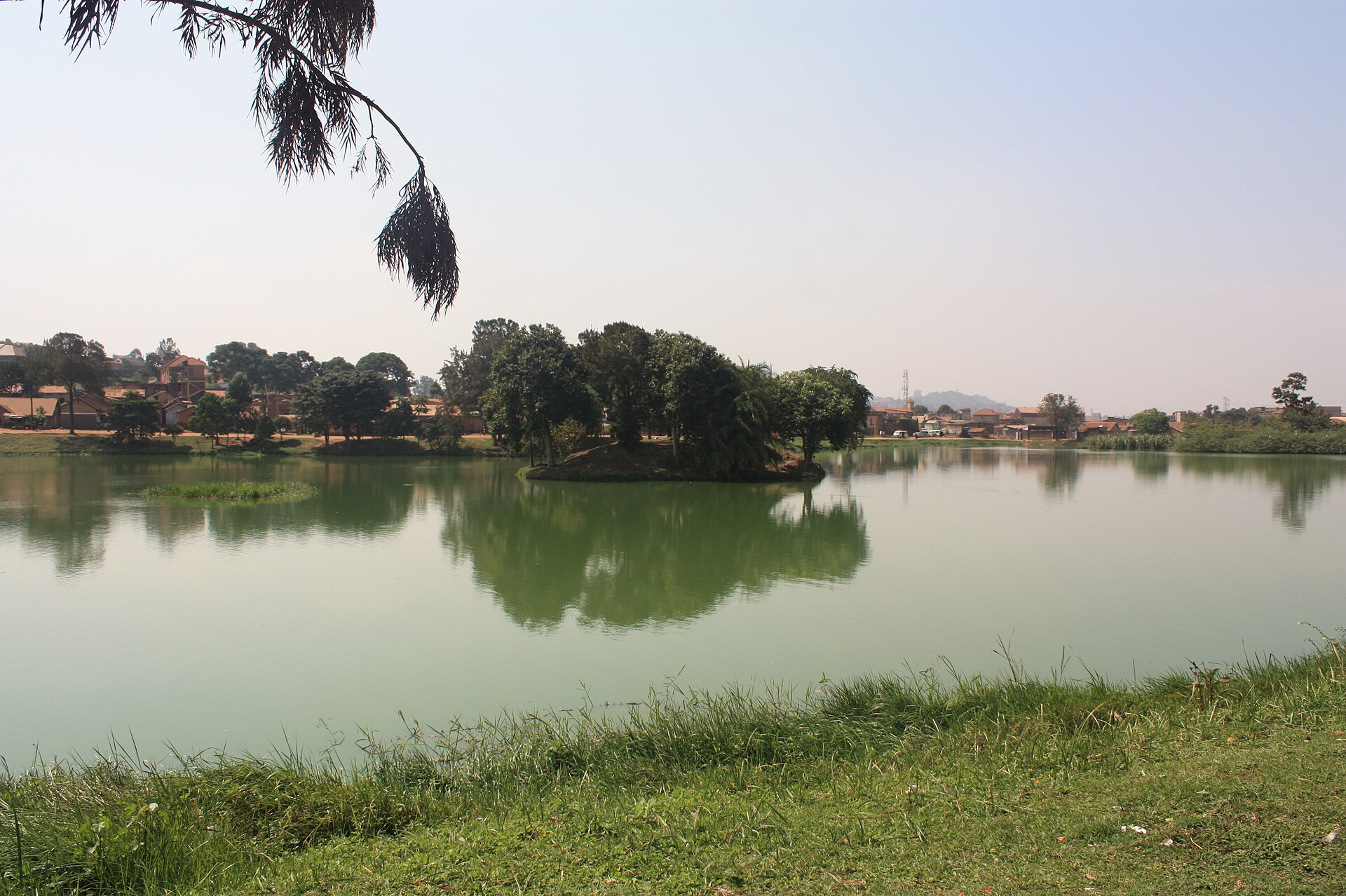
Kabaka's Lake, Ndeeba — dug by hand in the 1880s. Photo: Yokahead (CC BY-SA 4.0) - → 2 km · 5–10 min by vehicle to lunch in Lubaga
-
12:2570 min
Lunch in Lubaga
Ndeeba / LubagaNdeeba or Lubaga
Grilled tilapia or muchomo with matooke and greens, taken slowly under shade. This is also the natural point to swap notes with the group about the morning and to gauge how much of the afternoon they still want to walk.
-
13:5060 min
Lubaga (Rubaga) Cathedral
Hilltop · free entrySt Mary's Cathedral · Lubaga Hill
The third hilltop of the day and the Catholic counterpart to Namirembe: St Mary's Cathedral, built between 1912 and 1925, consecrated on 31 December 1925, and the seat of the Roman Catholic Archdiocese of Kampala — the oldest Catholic diocese in Uganda. The forecourt looks east across the valley to Mengo and Namirembe, which gives the group the whole royal-and-missionary geography of these hills in a single view.
- Take the walk round the outside of the building before going in — the brickwork and the scale are best read from the grounds.
- Respect any service in progress; visitors are welcome quietly between services.
- → 1.7 km · 5–10 min by vehicle back to Mengo
-
15:0560 min
Craft and souvenir stop
Mengo / BulangeMengo and the Bulange area
Bark cloth, basketry, beadwork and Buganda-themed carvings around Mengo and Bulange — the sensible place to buy before the group leaves, and a chance to talk to the makers about what a clan motif means on a piece. Buganda bark cloth, beaten from the fig tree, is the kingdom's oldest craft and was inscribed by UNESCO as intangible cultural heritage.
Guide note. Prices in this area are negotiable and usually fair. Fixed-price shops and craft cooperatives take cards; individual stallholders want shillings. Advise the group to carry small notes.
-
16:1545 min
Golden hour over Mengo
WalkNamirembe and Mengo hills
Close the two days the way they opened — on foot, on the ridge, with the light coming in low over the city. A short walk between Namirembe and Mengo gives the group the last of the views and the time to say what the two days actually meant to them.
-
17:0090 min
Farewell dinner
Mengo / KabalagalaMengo or Kabalagala
A last long dinner: grilled fish, matooke, groundnut sauce, and a cold Nile Special or a passion-fruit juice for the non-drinkers. This is where the guide's debrief happens naturally — what landed, what could be dropped, and what to book first next time.
-
18:30End
Drop-off at Ndejje Road
End of itineraryNdejje Road, Namirembe
Return the group to the Ndejje Road address. Settle the guide and driver gratuities, hand over the photo set from the two days, and confirm onward plans.
If plans change
What to do when the schedule pushes back
These are working royal and religious sites, and Kampala's traffic obeys nothing. The five contingencies below are the ones that actually come up.
Rain
The heaviest rain falls March–May and September–November, usually in short afternoon bursts. Flip the day: do Kasubi, the palace and the mosque interiors first, hold the Royal Mile, the market and the lake for a dry window. Carry two umbrellas in the vehicle and non-slip shoes for the grass paths at Kasubi.
Royal ceremonies close a site
The Lubiri and Kasubi can close at short notice for kingdom observances, and the annual calendar around the Kabaka's birthday and coronation anniversary is especially busy. Reconfirm both 48 hours ahead with the Buganda Kingdom tourism office, and keep the Uganda Museum as a swap-in.
Friday prayers
The Uganda National Mosque closes to visitors around Jumu'ah — access runs 09:00–11:30, then reopens at 14:00. Visit it before 11:30 on Friday, or shift it to Saturday morning instead of Kasubi if the group prefers a slower start.
Traffic
07:00–09:30 and 17:00–20:00 are the choke points. Keep morning departures at 08:00, keep the 11 km run to Ntinda out of the 17:00 window, and treat every drive time in this document as a floor rather than a forecast.
The residence is never open
Twekobe — the Kabaka's actual residence inside the Lubiri — is not open to visitors and no guide can arrange it. Be straight with guests about that in advance: the tour is the compound, the gates, the dungeon, the collection room and the story, and it is worth the visit on its own terms.
Extra half-day to fill
Uganda Museum on Kira Road (≈6 km, east) is the oldest museum in East Africa, founded in 1908, with ethnography, archaeology and a collection of traditional musical instruments. Alternatively the Uganda Martyrs' Shrine at Namugongo, for the story of the 1886 martyrs — both are half-day visits.
Practical information
Costs, etiquette and what to bring
Indicative figures for planning only. Gate fees are collected on site, published rates differ between sources and residents pay less than foreign visitors — always reconfirm before you quote the group.
| Site | Entry | Notes |
|---|---|---|
| Kasubi Tombs | ≈ USD 20 UGX 20,000 EA UGX 10,000 UG | Mandatory guided tour included. Rates vary by source — confirm at the gate. |
| Uganda National Mosque | UGX 25,000 ≈ USD 7 | Includes guided tour and the minaret climb. UGX 10,000 for East Africans; under-12s free. |
| Ndere Cultural Centre | UGX 95,000 ≈ USD 30 | Friday show, dinner included. UGX 55,000 for Ugandan nationals; UGX 30,000 for children 3–12. |
| The Lubiri (Buganda Palace) | Fee at gate | Guided tour included. Reconfirm the current rate the day before. |
| Bulange (Lukiiko) | Nominal | Guided tours arranged at the kingdom's tourism desk. |
| Namirembe & Lubaga Cathedrals | Free | Donation customary. Visitors welcome between services. |
| Kabaka's Lake | Boat locally | Agree the price on the shore before boarding. |
Currency: Ugandan shilling (UGX). Carry small notes and coins for gate fees, boat rides and market purchases. Budget separately for the driver, fuel, lunch and gratuities.
- Cover shoulders and knees at both cathedrals, the mosque and the tombs.
- Remove shoes at the Bujjabukula gatehouse at Kasubi; socks are fine.
- Women: carry a wrap or scarf — head covering at the mosque, leg covering at Kasubi.
- Ask first before photographing people, and again before publishing a face.
- Follow the site guide on where cameras and phones go away.
- Greet in Luganda where you can: Oli otya? — how are you.
- Don't touch regalia, drums, bark cloth or the screens around the tombs.
- Don't photograph inside the tomb chamber at Kasubi or the palace residence.
- Don't film security installations, gates or uniformed personnel.
- Don't walk between a speaker and a royal party during a ceremony — wait to be waved through.
- Don't drink tap water, and don't offer alcohol at religious sites.
| Leg | Distance | Time | Mode |
|---|---|---|---|
| Ndejje Road → Namirembe Cathedral | 1.3 km | 5–10 min | Vehicle (uphill) |
| Namirembe Cathedral → Bulange | 1.1 km | 15 min | On foot, downhill |
| Bulange → Lubiri, via the Royal Mile | 1.3 km | 20 min | On foot, the ceremonial avenue |
| Lubiri → lunch (Mengo / Namirembe) | 1.7 km | 5–10 min | Vehicle |
| Lunch → Mengo Market & clan monuments | 0.6 km | 5 min | On foot |
| Mengo Market → Uganda National Mosque | 1.3 km | 5–10 min | Vehicle |
| Mosque → Ndejje Road | 1.3 km | 5–10 min | Vehicle |
| Ndejje Road → Ndere Centre, Ntinda (optional) | 11 km | 30–45 min | Vehicle, each way |
| Ndejje Road → Kasubi Tombs | 2.6 km | 8–15 min | Vehicle |
| Kasubi Tombs → Kabaka's Lake, Ndeeba | 5.2 km | 15–25 min | Vehicle |
| Kabaka's Lake → lunch (Lubaga / Ndeeba) | 2.0 km | 5–10 min | Vehicle |
| Lunch → Lubaga Cathedral | 1.0 km | 5 min | Vehicle or steep walk |
| Lubaga Cathedral → Mengo (crafts) | 1.7 km | 5–10 min | Vehicle |
| Mengo → Ndejje Road | 0.6 km | 5 min | Vehicle |
Distances are approximate road distances between the sites. Times are free-flow estimates; add 50–100% inside the 07:00–09:30 and 17:00–20:00 windows.
Before departure